Pneuma
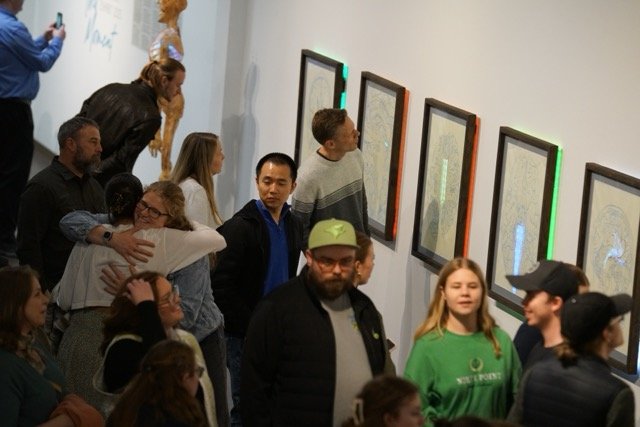
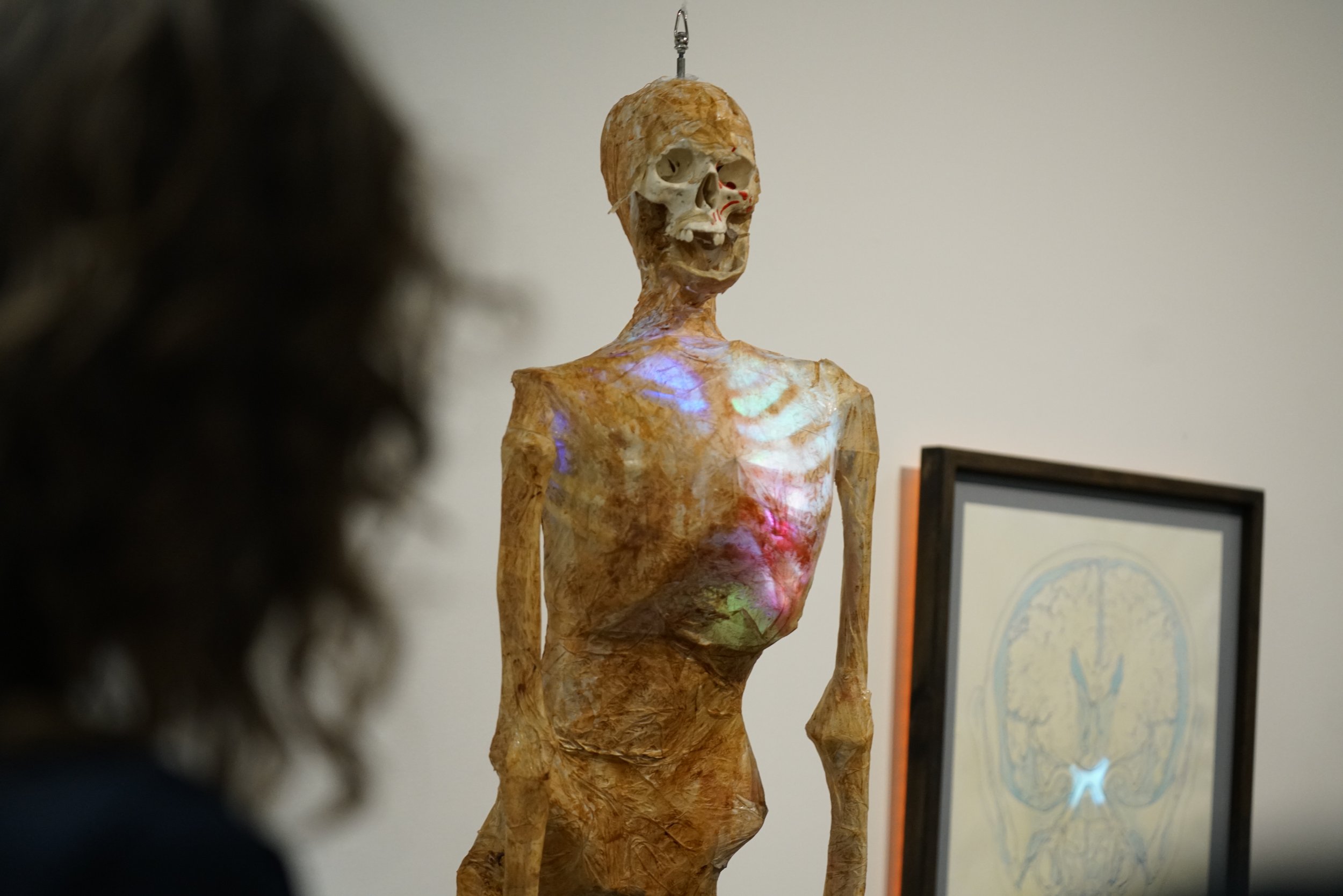
Completed during my final semester at Redeemer University, Pneuma is a visual exploration of where our essence might reside. It examines the elusive intersection of body, soul, and scientific inquiry. Neuroanatomical illustrations chronicle theories from the 15th century to present, while a mummified figure emanates a luminous energy of being. This exhibition invites curiosity and fascination into the mystery of this trifecta. This was displayed as part of the group exhibition Beyond This Moment, held at Redeemer University from April 5th - May 23rd, 2025.



Science, philosophy, faith, and art once comprised a unified pursuit of understanding. Pneuma looks back to the time of polymaths when these topics were not seen as opposing forces but as complementary paths to truth. The illustrations follow the history of Western medicine, where we see faith and science falling farther away from each other. Much of the sciences aim to understand the material realm while faith acts as an exercise in trusting in the spiritual. What if there is a physical location within the human body where our soul resides? This “seat of the soul,” as Pythagoras calls it, is explored by incredibly intelligent figures, each theorizing different structures in the brain.
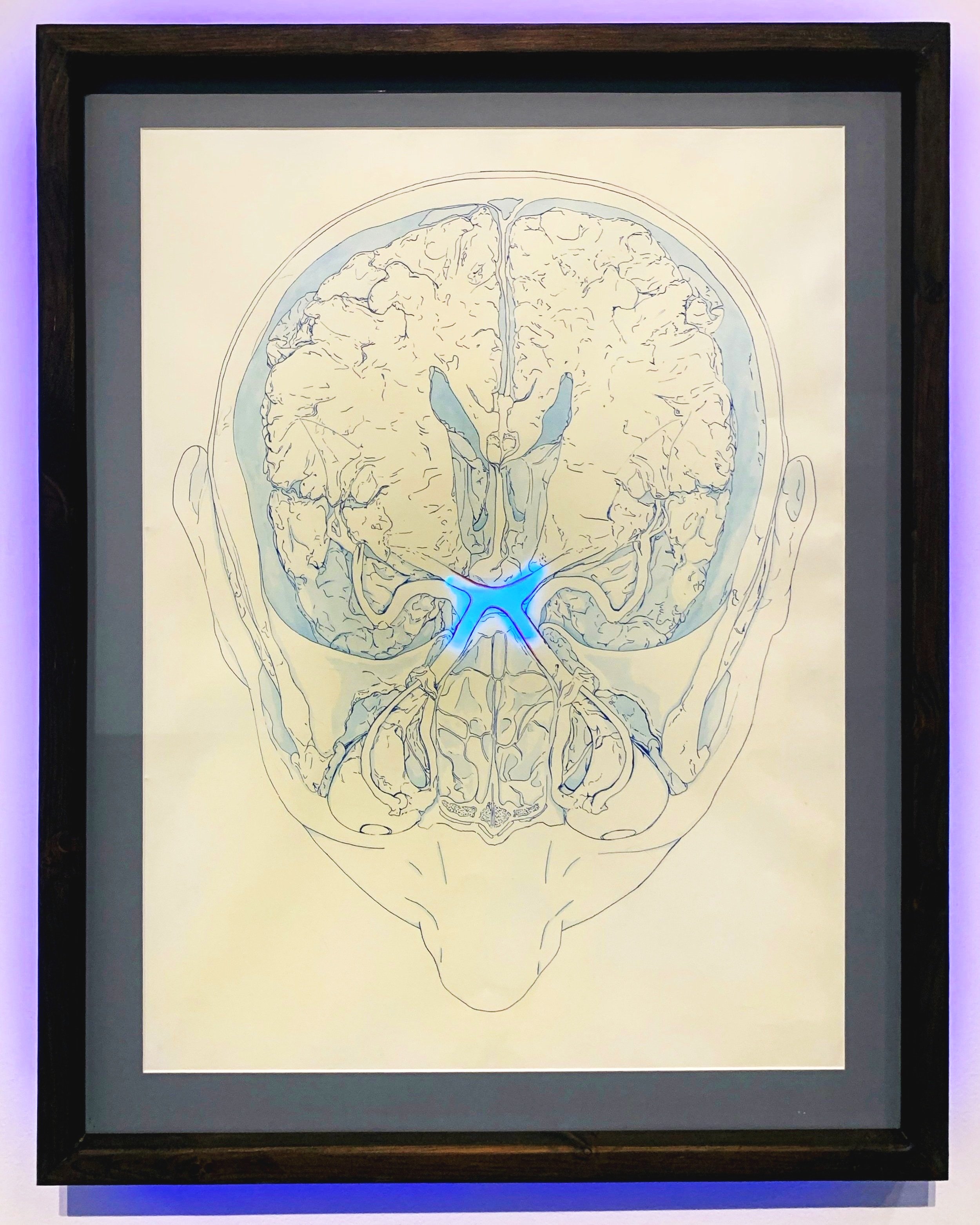
Leonardo da Vinci (1452-1519) - Optic Chiasm
René Descartes (1596-1650) - Pineal Gland
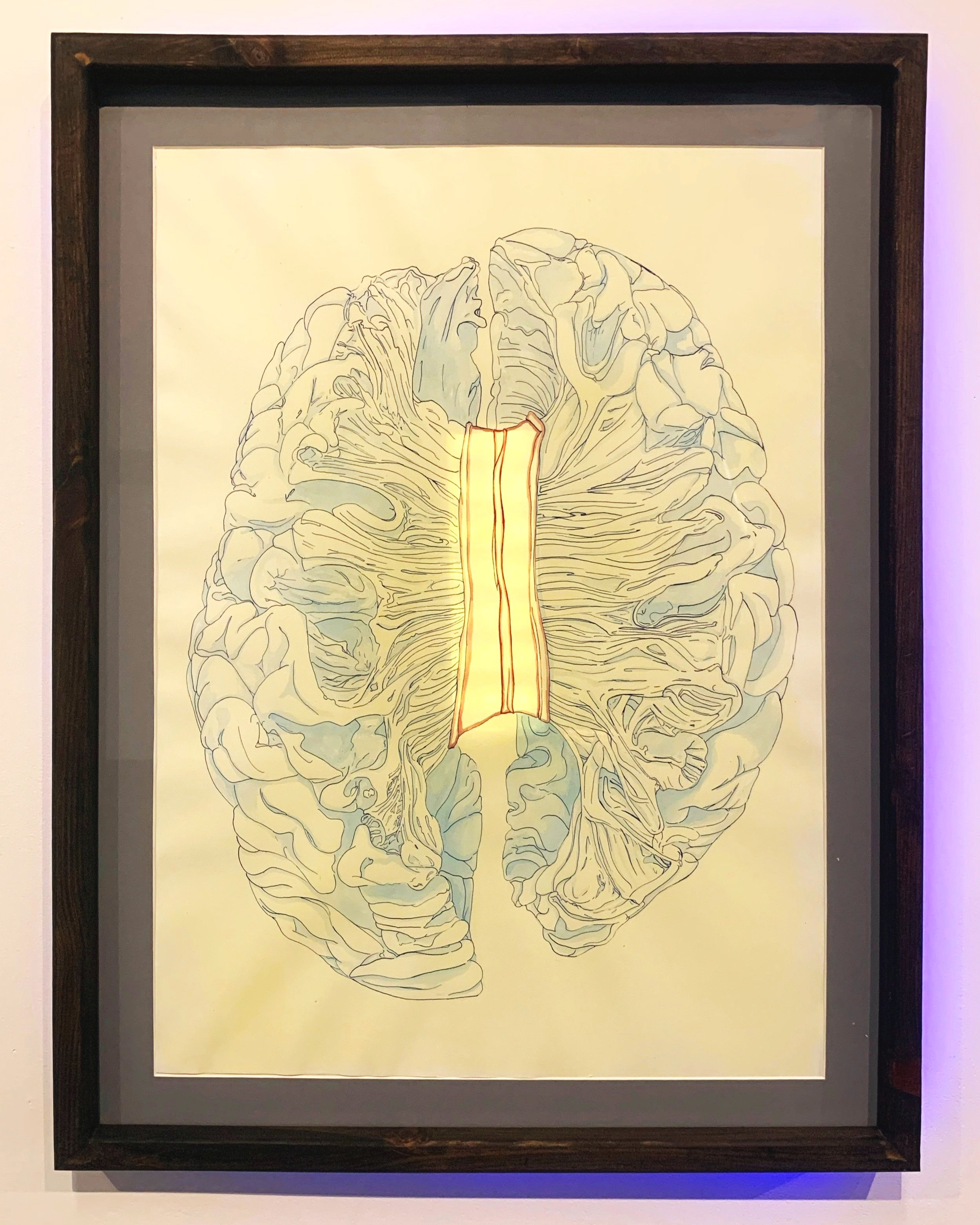
Giovanni Lancisi (1654-1720) - Corpus Callosum
Albrecht von Haller (1708-1777) - Brainstem
Susan Greenfield (1997) - Neurotransmitter Pathways
These elements are delicately rendered using soft blue ink over fine linework. Each illustration emphasizes one aspect of the brain with a faint red outline, the focus of study. Light emanates from these anatomical forms, symbolizing the soul’s presence extending beyond material understanding. A decrepit body, hovering just above the ground, holds these same soul lights within its chest, flickering with color, resisting decay.
Ink is my chosen medium because its fluidity, like knowledge and spirituality, moves unpredictably but can be guided with careful intention. The paper itself is lightly yellowed with an acrylic wash to emphasize the mortality of each drawing. Pneuma brings together science and something more, a reminder that knowledge is fluid, ever-expanding, and deeply interconnected.